
Government-Supported Early Childhood Education (ECE) Programs: A Fast Track to a Meaningful Career
Government Support + Practical Training + High-Demand Career Path
If you are passionate about working with children but are concerned about long training periods or high tuition costs, Canada’s government-supported Early Childhood Education (ECE) programs offer a practical and affordable pathway. These programs help you gain hands-on skills, earn an industry-recognized credential, and quickly enter roles where the demand for early childhood educators is strong.
This program is designed for individuals looking to start a career in early childhood education. Through structured training and practical experience, participants are prepared to begin their professional journey while also supporting the development of childcare services in their communities.
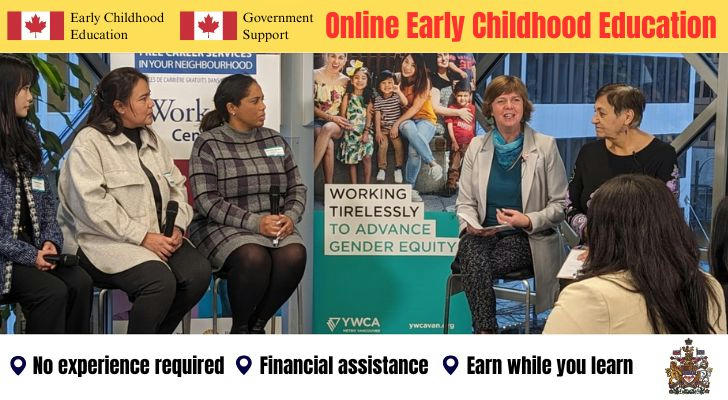
How Publicly Supported ECE Pathways Differ
Accelerated Learning Structures
Many ECE pathways supported through public funding are structured to shorten overall training duration. This enables participants to complete required learning more efficiently and enter childcare roles sooner than through traditional education routes.
Lower Cost Exposure
Public involvement helps reduce the overall financial burden of training. Depending on eligibility, learners may access various forms of financial assistance that offset tuition-related expenses.
Funding Channels Commonly Linked to ECE Training
Canada offers several funding mechanisms that may support individuals pursuing early childhood education, including:
OSAP (Ontario Student Assistance Program)
Provides a combination of non-repayable grants and repayable loans for eligible learners.
Better Jobs Ontario
Supports retraining for individuals affected by job loss or employment disruption.
Canada Job Grant
Contributes to training costs when employers participate in workforce development initiatives.
Flexible Tuition Structures X
Some institutions offer installment-based payment plans or partial self-funded arrangements.
Together, these mechanisms are intended to make professional training more accessible to adults at different life stages.
Organizations Supporting ECE Workforce Development
Across Canada, public authorities collaborate with nonprofit and community-based organizations to strengthen the childcare workforce. Examples include:
YMCA Early Childhood Training Programs (British Columbia)
Provide structured ECE education supported by public funding, with employment-oriented outcomes.
Alberta ECE Credentialing Routes
Offer recognized qualification pathways and financial support options for individuals entering early learning environments.
Westcoast Child Care Resource Centre (BC)
Delivers bursaries and targeted assistance for learners from underrepresented groups.
These initiatives reflect broader public strategies aimed at expanding access to qualified early childhood educators.
Distance-Based and Flexible Study Formats
Many publicly supported ECE pathways are delivered partially or fully online, making them suitable for individuals balancing employment, family responsibilities, or caregiving roles.
Online study models typically include:
Guided instruction led by qualified educators
Practical skill development components
Training aligned with childcare employer expectations
Credentials earned through these pathways are recognized across Canada’s childcare sector.
Credentials Earned and Employment Settings
After completing training, participants receive an Early Childhood Education certificate recognized by childcare employers nationwide.
Graduates commonly work in:
Childcare centers and preschools
Community-based and after-school programs
Early learning initiatives linked to health or social services
Private or home-based childcare environments
Public or nonprofit childcare projects
Earnings Overview for Early Childhood Educators in Canada
| Experience Level | Hourly Wage (Approx.) | Annual Estimate | Typical Responsibilities |
|---|---|---|---|
| Entry Level | $18 – $22 | $37,000 – $46,000 | Classroom support, assisting lead educators |
| 2–5 Years | $23 – $28 | $48,000 – $58,000 | Activity planning, child development support |
| Senior Roles | $30 – $36 | $62,000 – $75,000 | Curriculum leadership, staff guidance |
| Management / Specialist | $40 – $50 | $83,000 – $104,000 | Program oversight, training coordination |
Figures based on Canada Job Bank data and industry surveys.
Typical Learner Profiles for ECE Pathways
| Age Group | Common Situation | Why ECE Is Considered |
|---|---|---|
| 18–25 | Entering the workforce | Faster access to a stable field |
| 26–35 | Seeking long-term stability | Recognized credentials with flexibility |
| 36–45 | Career transition | Practical training supported by public funding |
| 46+ | Workforce re-entry | People-focused work with adaptable schedules |
Standard Enrollment Flow
Select an approved ECE pathway (online or campus-based)
Submit educational background and required documentation
Review available funding and support options with an advisor
Begin training and prepare for childcare employment
Availability within publicly supported programs may be limited, so early planning is often recommended.
Closing Perspective
Publicly supported Early Childhood Education pathways integrate affordability, adaptability, and employment alignment.
For adults interested in people-centered work with sustained demand and social relevance, ECE training supported through public mechanisms offers a practical entry point—without the structural barriers commonly associated with traditional education pathways.