
🌟 IVF & Fertility Preservation in the U.S.
How to Protect Your Future — And Pay Far Less Than You Think
Most people think fertility treatments are only for the rich.
That’s wrong.
In the U.S., IVF, egg freezing, and sperm freezing are becoming easier to access.
Costs are coming down.
Coverage is expanding.
And millions of people now qualify for help without knowing it.
If you’re working, busy, and not ready for kids today — this matters to you.

What IVF Really Is
IVF (In Vitro Fertilization) is a medical process that helps create a pregnancy.
Doctors fertilize an egg with sperm in a lab.
A healthy embryo is placed in the uterus.
People use IVF when:
- Single parents want children
- LGBTQ+ families want options
- Pregnancy hasn’t happened naturally
- Medical conditions exist
It’s safe.
It’s proven.
It’s widely used across the U.S.
What Egg & Sperm Freezing Actually Means
Egg and sperm freezing is simple:
You store healthy eggs or sperm today.
You use them later — when life is ready.
This is called fertility preservation.
Millions of working adults choose it because:
- Young professionals who want to focus on their careers
- People not ready for children yet
- Individuals facing medical treatments (like chemotherapy)
- Workers in high-stress or physically demanding jobs
It doesn’t force a decision.
It gives you control.

Your Employer May Already Be Paying — You Just Haven’t Checked
This surprises most people:
Many U.S. employers already pay for fertility benefits.
Big companies like:
- Starbucks
- Amazon
- Apple
- Microsoft
offer benefits that can include:
- IVF cost support
- Egg freezing reimbursement
- Sperm freezing coverage
- Fertility medications
- Storage fees
Many other companies use benefit providers like Progyny, Carrot, Maven, and Kindbody to quietly offer the same services.
You don’t have to be a manager.
Hourly and full-time workers often qualify.
Most people never ask HR.
They lose thousands of dollars in unused benefits.
Your State Law Could Already Be Reducing Your Costs
Where you live matters.
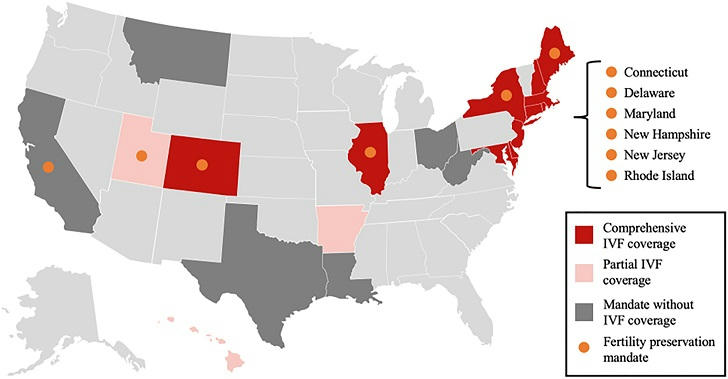
More than 25 U.S. states now require insurance companies to cover fertility treatments.
Real examples:
- California – requires certain plans to cover IVF
- New Jersey – expanded legal infertility coverage
- Illinois – mandates insurance support for infertility services
- Connecticut – legally requires IVF coverage in many plans
What this means:
- Your insurance may be legally required to help pay
- Your real cost may be far lower than clinic prices
- You may qualify automatically
Most people never search this.
You can.
Why Smart People Act Early
Fertility changes with age.
That’s real.
That’s medical.
But freezing earlier can protect better quality.
You don’t have to choose children now.
You just keep the option alive.
That’s why professionals in their 20s and 30s are acting early.
Costs Are Not What You Think
Prices scare people.
But the real numbers are different.
Because of:
- Employer benefits
- State laws
- Payment plans
- Special assistance programs
Many people pay much less than public clinic prices.
Some pay only a fraction.
What to Do Next
You don’t need to decide anything today.
Just check:
- ✅ Your state coverage
- ✅ Your employer benefits
- ✅ Available financial support
This takes minutes.
Not months.
Your Future Deserves Options
You worked hard for your life.
You deserve choices.
Frequently Asked Questions
High-Value Answers for IVF, Egg Freezing, and Fertility Preservation
1. How much does IVF cost in the United States?
IVF costs vary widely across the U.S., but many patients pay far less than the listed clinic prices. Employer fertility benefits, state insurance laws, financing plans, and special IVF assistance programs can significantly reduce the total cost.
2. Is egg freezing worth it if I’m still in my 20s or early 30s?
Egg freezing is most effective at younger ages because egg quality is higher. Many people choose to freeze eggs early to protect future fertility and avoid age-related decline. It’s a common choice among working professionals who want flexibility.
3. Does health insurance cover IVF or egg freezing?
Coverage depends on your insurance provider and the state you live in. More than 25 states have fertility insurance mandates, and many employer plans now include IVF coverage, egg freezing reimbursement, or fertility preservation benefits.
4. Which employers offer fertility benefits?
Many large employers, including major retail, tech, and service companies, now offer fertility coverage through providers like Progyny, Carrot, or Maven. Benefits can include IVF support, egg freezing coverage, sperm freezing, and storage fees.
5. What are state IVF insurance laws?
Some states legally require insurers to cover infertility treatment. States like California, Illinois, Connecticut, and New Jersey offer strong mandates that can reduce or eliminate out-of-pocket IVF costs for eligible individuals.
6. How long can frozen eggs or sperm be stored?
Eggs and sperm can be safely stored for many years. Modern storage methods maintain quality long term, allowing individuals to delay parenthood while preserving their reproductive potential.
7. What is the IVF cost breakdown?
IVF cost typically includes consultations, lab work, medications, egg retrieval, fertilization, and embryo transfer. Prices differ by clinic, but insurance coverage, employer benefits, and payment plans can reduce the total significantly.
8. Are there payment plans or financing options for IVF?
Many fertility clinics offer payment plans. Additionally, some employers provide fertility stipends, and several financial aid programs exist to support individuals seeking IVF, egg freezing, or sperm freezing.
9. When should someone freeze their eggs?
Most specialists recommend considering egg freezing in your 20s or early 30s for the highest success rates. However, people freeze eggs at all ages depending on medical, personal, or career factors.
10. Are there low-cost fertility treatment options available?
Yes. Some clinics offer discounted packages, and many states require insurance to cover portions of treatment. Employer-based fertility benefits can also dramatically reduce costs for IVF, egg freezing, or sperm storage.